10,000+
staff hours forecast back annually
99%
overall automation success
£190,000
annualised capacity and pay-cost efficiency
73%
of surveyed colleagues support further automation
From applicant to colleague, automation connects Bristol’s recruitment journey
A connected suite of automations at Bristol NHS Foundation Trust is transforming recruitment, reducing repetitive administration and giving skilled recruitment teams more time to support candidates, hiring managers and workforce priorities.
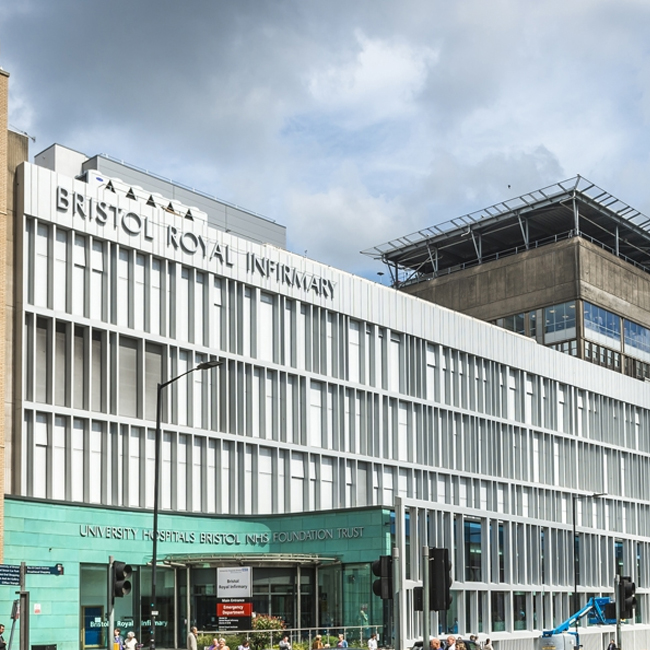
“These changes have supported a 21% reduction in time to hire for AfC staff and a 50% reduction for Medical and Dental appointments”
Sophie Dilworth,
Head of Programmes (People Transformation),
Bristol NHS Foundation Trust
A high-volume journey constrained by localised processes and manual hand-offs.
- Two trusts with different processes and systems preparing
for merger. - 135,000 applications and around 8,000 new starters each year.
- 328,000 people employed across the new trust.
Recruitment links workforce plans and patient care. Yet candidate journeys across Trac, ESR, Trust ID and local systems relied on repeated manual transfer, validation and reconciliation of information, while teams maintained rigorous employment-check standards, payroll accuracy and local governance.
These manual hand-offs created avoidable delays, rekeying and error risk, and took skilled teams away from candidates, hiring managers and complex cases.
Rules-based work included linking records, generating conditional offers, processing digital identity checks, preparing ESR records and assembling outcome documentation.
As the predecessor organisations moved towards merger, the partnership needed to align ways of working, not automate two sets of legacy processes.
The ambition was one connected, scalable recruitment journey, standardised before automation and designed around candidates, hiring managers and workforce teams.
Standardise first, then automate the connected journey.
Bristol’s workforce and recruitment teams co-designed the programme with NHS Shared Business Services, supported by UiPath, ESR, payroll and IT colleagues. Together, they mapped the existing journey, identified pain points and agreed core principles and future processes before development began.
Four core principles:
- Standardise before automating, retaining only legitimate
local requirements. - Design around users and the candidate journey, not individual system limitations.
- Introduce automations progressively, monitor exceptions and use data to drive continuous improvement.
- Keep people in control of judgement-based activity, complex cases and candidate communication.
Connecting seven processes:
- ESR vacancy creation and linking to Trac
- Generating conditional offer letters
- Initiating and processing digital identity checks
- Validating professional registrations
- ESR record creation
- Preparing new-starter information for payroll
- Securely archiving candidate recruitment documentation
50%
reduction in time to hire for medical and dental staff
21%
reduction in time to hire for Agenda for Change staff
91%
candidate satisfaction
80%+
faster conditional offers
Faster hiring. More capacity. Better experience.
Connected automation is improving the recruitment journey from vacancy creation to new colleague.
Faster candidate progression. Identity-check turnaround has halved from two weeks to one, contracts are issued four days faster, and the programme has supported wider time-to-hire reductions of 50% for Medical and Dental staff and 21% for Agenda for Change staff.
Reliable performance at scale. Automations are achieving a 99% overall success rate. Conditional offers are generated in approximately three minutes instead of 15 – an 80% reduction. The solutions also absorb bulk-recruitment surges while continuing to operate within strict SLAs.
Capacity returned to recruitment. The programme is forecast to return more than 10,000 staff hours annually – equivalent to approximately £190,000 in annual pay-cost efficiency.
Insight beyond automation. Trend analysis exposes recruitment bottlenecks and upstream candidate-data issues, enabling
Bristol teams to address root causes earlier and reduce downstream rework.

Contact our team
"*" indicates required fields