
The 10 Year Health Plan for England commits the NHS to achieving 2% year-on-year productivity gains and becoming “the world’s most collaborative public healthcare provider.” The Health Foundation’s Productivity Commission has identified workforce, capital, technology and transformation as the four drivers of productivity growth. Shared services sit at the intersection of all four.
Yet collaboration in the NHS remains easier to talk about than to do. Promising pilots don’t always scale. Efficiency gains erode over time, once investment slips away. Organisations revert to fragmented ways of working even when they want to work together because incentives are based on hyper-local performance, rather than cooperation. If the NHS is to deliver on the 10 Year Plan’s ambitions, it needs to understand why collaboration so often stalls, and what it takes to make it stick.
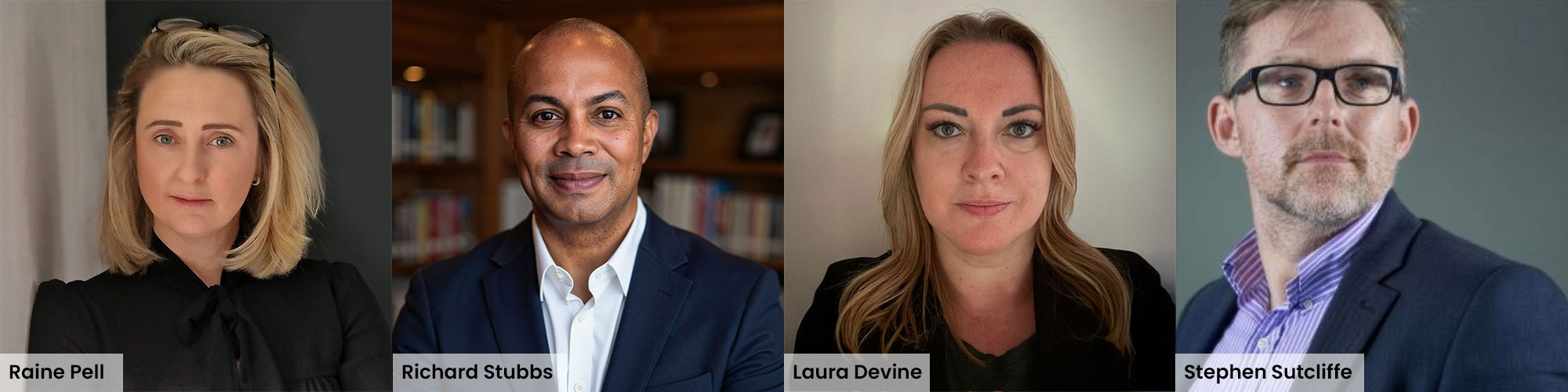
This was the focus of the fourth and final event in the Futureproofing the NHS series of roundtables. The discussion brought together Richard Stubbs, Chief Executive of Health Innovation Yorkshire & Humber and expert advisor to the Health Foundation’s Productivity Commission; Stephen Sutcliffe, Director of Finance and Accounting at NHS SBS; and Laura Devine, Senior Delivery Lead for Commercial on the New Hospital Programme. The panel was chaired by Raine Pell, Executive Director of Marketing and Communications at NHS SBS. They explored what it takes to embed shared services for lasting impact – and why, nearly a decade on from Lord Carter’s review of unwarranted variation, the NHS has yet to realise the full value he identified.
They agreed that the barriers to collaboration are less about technology or structure than about culture, ownership, and the willingness to do things differently. Progress will require a number of key factors: brave leadership, sustained investment, and governance arrangements that genuinely support collective decision-making rather than pulling organisations back into silos.
Theme one – collaboration as culture, not structure
At the heart of the discussion was a fundamental challenge that has persisted despite decades of reform initiatives in the NHS: collaboration requires organisations to give something up! Whether it is control over a function, loyalty to a particular way of working, or simply the comfort of autonomy, shared services demand what Richard Stubbs called “a degree of devolved sovereignty.”
Richard framed the issue in terms of culture and identity. Too often, he argued, staff feel loyalty to their organisation first and the system second. Making collaboration work requires a shift in mindset: “It’s about asking people to think about that kind of almost ‘club versus country’ approach to what they come to work for. Shared services will require people to move away from maybe long-standing loyalty to individual organisations and to think about that more collective good” [edited for clarity].
If cultural change feels like it’s being imposed, Richard added, it won’t work. Instead, it is “a journey that we need to take people on, rather than doing it to people.” He returned to the theme of ownership as the greatest barrier: “If you are really thinking about pulling up the drawbridge, protecting what you’ve got – whether it’s your own job, your own resources, sometimes your own power and control – you can talk the talk, but you’re not really going to walk the walk” [edited for clarity].
Stephen Sutcliffe agreed, focusing on what it takes to unlock change. He argued that most people do want to collaborate, so the question becomes what is blocking them: “Sometimes we don’t help individuals – we don’t provide the safety net around them, support them when they’re challenging, incentivising them in the right way” [edited for clarity].
Stephen also challenged the assumption that organisations are as unique as they believe themselves to be. Drawing on ‘the 80/20 rule’, he suggested that much of what the NHS does is standard: “Paying an invoice is paying an invoice, whether you’re in a provider organisation, a commissioning organisation, a social care organisation or a commercial organisation. But I still hear, ‘No, we’re unique and special, and we need to do it in this particular way'” [edited for clarity].
His view was that overcoming this instinct requires brave leadership: “How do you say, ‘I’m going to do the right thing for the public purse, not the right thing for me, the right thing for my organisation?’ That’s really hard, particularly when individual organisations are held to individual account” [edited for clarity].
Key takeaways
- Collaboration requires “devolved sovereignty” – organisations must be willing to give something up to gain something greater.
- The shift from organisational loyalty to system-wide thinking is a cultural journey, not a structural fix.
- Leaders need safety nets and support to make brave decisions that prioritise the collective over the institutional.
Theme two – data visibility as the foundation for procurement collaboration
The 10 Year Health Plan frames procurement as a strategic tool rather than a transactional function. There is evidence that shared approaches deliver significant value. For example, NHS SBS’s work with Norfolk & Waveney brought organisations onto a unified platform and identified £7.3 million in previously invisible savings. Yet such successes remain the exception rather than the norm. The panel explored what it takes to build the data visibility that enables effective procurement collaboration.
Laura Devine set out the building blocks: integrated and, where appropriate, AI-powered procurement platforms; standardised data across organisations; and a culture that encourages data sharing. She emphasised the importance of data quality: “We need to make sure that data is cleansed regularly, that there’s removal of duplications. When we’re engaging with suppliers to get data from our contracts, we need clearly defined metrics – KPIs that are measured and tracked in an appropriate way” [edited for clarity].
Laura argued for standardised taxonomies so that data is comparable: “We need consistency at that national level – when we’re looking at suppliers, when we’re referring to products – because otherwise it’s very difficult, you do not have comparable data. You don’t know whether you’re comparing apples with apples” [edited for clarity].
She pointed to Norfolk & Waveney as proof of what becomes possible when data is unified: a catalogue of over one million items, £7.3 million in potential savings revealed, requisitioning time reduced by 90%, and over 3,000 staff trained on the new system. Her challenge to the panel was to imagine that scaled nationally: “That’s one ICS. Imagine what we could do if we pull that together at a national level – the information we would have as a whole would be incredible” [edited for clarity].
Laura was also clear that collaboration on data requires action, not just intent: “It’s good to say we’re going to collaborate, but you actually need to take the action and collaborate on making sure that you’re using that data together. We need cross-functional access to enrich that data and one source of the truth” [edited for clarity].
Key takeaways
- Effective procurement collaboration depends on data visibility – standardised, cleansed, and comparable across the system.
- Proof points exist. For example, Norfolk & Waveney identified £7.3 million in invisible savings through a unified platform.
- The NHS should aim for national-level data integration to fully exploit its collective purchasing power.
Theme three – from pilots to scale, why digital transformation stalls
The NHS has numerous examples of successful digital and automation initiatives, yet these remain isolated pockets of progress rather than a system norm. The panel explored why promising pilots so often fail to scale, and what role shared services can play in bridging the gap.
Richard Stubbs agreed with an earlier observation in the webinar series by Pritesh Mistry of the King’s Fund that corporate services represent a “safer space” for digital innovation, as the risk is lower and implementation can be faster. He argued that shared services should use this advantage to be “the tip of the spear when it comes to the cultural shift of what business-as-usual tools look like for us in the NHS.”
Richard drew a comparison with the banking sector: “The transformation that we’ve seen as customers of our banks over the last 20 years, how digitisation has radically transformed our relationship, our engagement, the way we deliver our banking function in a way that’s convenient to us as customers, but also keeps our data safe. It’s a really interesting case study” [edited for clarity].
However, Richard was clear that simply identifying solutions is the easy part. The hard part is implementation, and it does not become simpler with repetition: “The implementation is just as hard in sites two, three, four, five and 99 as it is in site one. It doesn’t get easier. The more we can aggregate, the more we can say we’re able to have shared services covering a wider amount of the NHS footprint. Therefore, when we implement, we implement once and cover a geographical range, rather than trying to do things 450 times” [edited for clarity].
Laura Devine identified several reasons why digital pilots fail to scale. Funding is frequently short-term and piecemeal, making multi-year planning difficult: “There are reports estimating a capital shortfall of £37 billion since 2010 within digital – it’s a big problem” [edited for clarity]. Legacy systems create interoperability challenges, leaving staff to manage siloed data and administrative burdens. And staff themselves can be resistant to change, fearing that automation will threaten their jobs.
Laura argued that the message needs reframing: “One of the things that resonated with me – staff get feedback that, ‘This is going to take my job. Why are you bringing this bot to me?’ It’s making sure that staff understand it’s not about taking the job. It’s about giving them the time back to actually do the job that adds value” [edited for clarity].
Stephen Sutcliffe reinforced the scale of what is possible when digital transformation is done once, centrally. He pointed to NHS SBS’s implementation of robotic process automation: “We’ve saved just over 500,000 people hours on the back of the implementation of RPA, because we can do that at scale. We can bring the expertise together, we can invest in it, and we’re doing that for all of our clients once” [edited for clarity].
Richard Stubbs returned to a point about underinvestment. He argued that the NHS does not invest enough in user experience expertise, the skills that make technology intuitive and compelling: “Tech companies in the States put an awful lot of money into getting world-class experts to make sure systems are designed to be intuitive, plug and play, interoperable. I think, unfortunately for us in the NHS, we’re probably not yet investing the kind of volume of funding that’s needed to make it not just that the technology exists, but that the technology is compelling” [edited for clarity].
Key takeaways
- Corporate services are a safer space for digital innovation – lower risk, faster implementation, and a way to build confidence.
- Implementation does not get easier with repetition – the case for doing things once, at scale, is compelling.
- Funding constraints, legacy systems and workforce fears all inhibit scaling but the biggest gap may be underinvestment in user experience and change management.
Theme four – governance that enables, not fragments
Even when organisations are willing to collaborate, governance can pull them back into fragmented ways of working. The panel explored which aspects of governance help collaboration stick and which unintentionally reinforce silos.
Laura Devine began by describing what can often go wrong when organisations try to collaborate. Siloed governance structures mean that priorities stay organisation-facing rather than cross-organisational: “If it’s not cross-organisational, it becomes about that one organisation. It can lead to disjointed decision-making, and they [organisational leaders] don’t have the authority to make a decision for the group – just for themselves” [edited for clarity].
She also pointed to capability gaps, noting that committees are too frequently staffed by people who lack the knowledge, experience, or authority to make decisions on behalf of the partnership. And she warned against the temptation to launch too many initiatives at once: “In a rush to collaborate, organisations may launch too many initiatives, and if your governance is not brought together, there’s no coordinated approach, no division of labour. It can be very unproductive” [edited for clarity].
Laura added that what works are formalised but genuinely collaborative structures, with representation from all partner organisations and clear decision-making frameworks. People on governance panels need to be empowered to make decisions on behalf of the group. Roles and responsibilities must be documented, and crucially, shared goals and strategic alignment need to be agreed at the outset: “Sometimes those very initial steps haven’t been laid down. The organisations haven’t even decided and agreed what direction they’re going in” [edited for clarity].
Richard Stubbs added a broader reflection. He argued that this level of collaboration “requires people to meet in the middle and to understand the give and the get.” For staff, it may mean putting down an organisational ‘badge’ they have worn for years. For trusts, it may mean procuring a different service or relinquishing control of a function. In all cases, it means accepting change and, for Richard, change always comes back to culture.
Key takeaways
- Siloed governance structures keep priorities organisation-facing and prevent collective decision-making.
- Effective collaboration requires formalised structures with cross-organisational representation, documented accountability, and agreed shared goals.
- Transparency and a common language build the trust that makes governance work.
Conclusion
The discussion revealed both the scale of the opportunity and the depth of the challenges around collaboration. The NHS has evidence of it working, from RPA saving 500,000 people hours, to Norfolk & Waveney revealing £7.3 million in hidden savings. These examples demonstrate what becomes possible when organisations work together, but they remain exceptions rather than the norm.
The panel was clear that the barriers are fundamentally cultural. Progress requires leaders willing to prioritise the public purse over institutional interests, staff supported in embracing new ways of working, and governance arrangements that enable collective decision-making rather than pulling organisations back into silos.
Funding also matters. Short-term, piecemeal investment makes long-term planning difficult, while underinvestment in user experiences and change management means that even good technology fails to land. The Health Foundation’s mantra – ‘fund the change, not just the tech’ – resonated throughout the discussion.
Nearly a decade on from Lord Carter’s review, the NHS has yet to fully realise the value he identified in reducing unwarranted variation. The panel agreed there is already a good understanding of what makes collaboration work, and what gets in the way. What matters now is the deliberate extension of proven models and processes, sustained implementation, and the cultural courage to do things once and do them well.
A white paper drawing on insights from the full Futureproofing the NHS series will be published in spring 2026.